When someone asks me for an update on a support issue, I want to be able to answer without piecing together an email thread, an alert, and a developer’s notes. What did the customer see? What has happened since? What still needs to be checked? Those are the questions I want the case itself to answer.
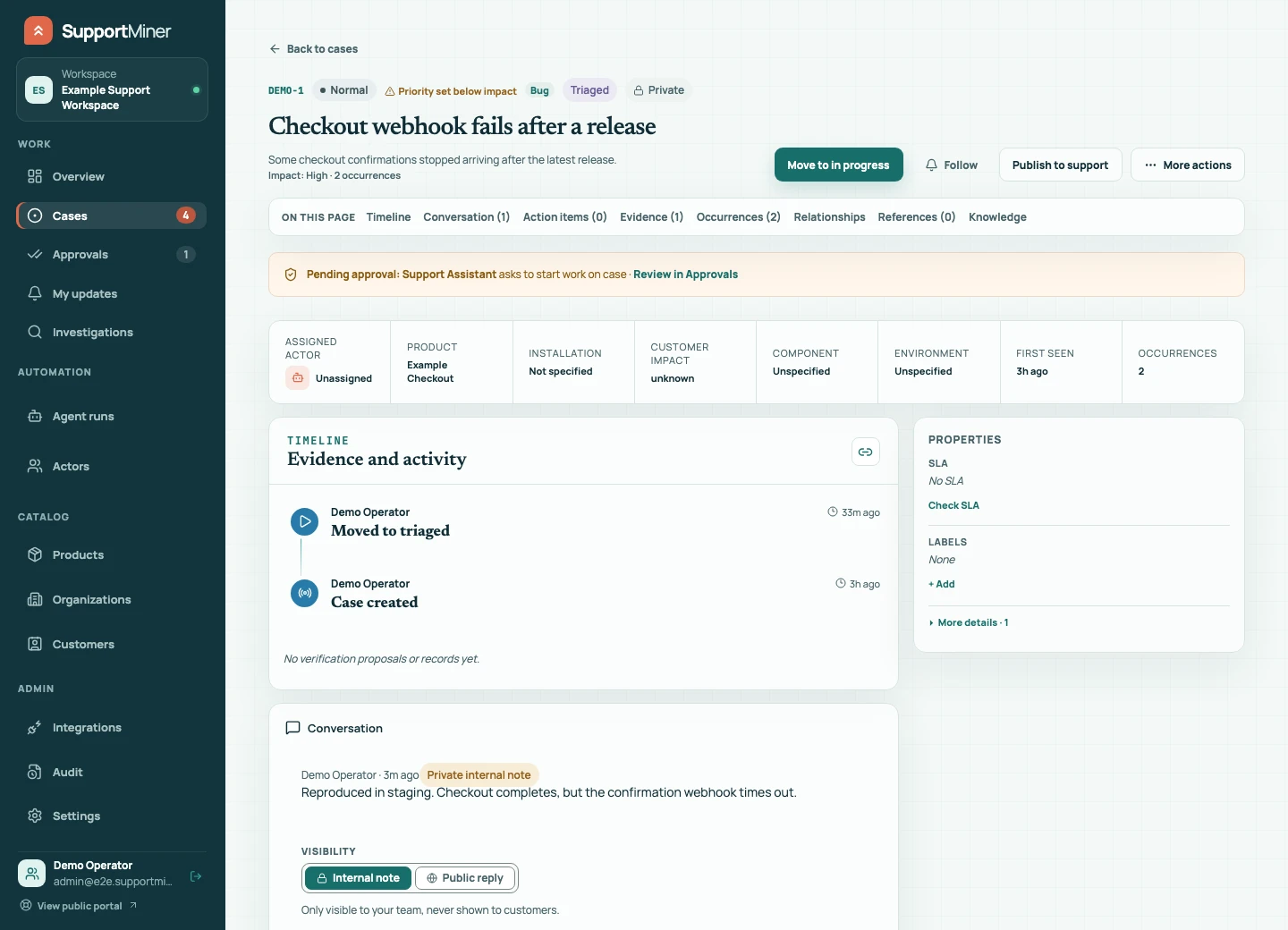
That’s the part of support work I’m building SupportMiner around. A case can hold the original report, related events, evidence collected during the investigation, decisions, and the work that follows. If another person picks it up, they can see what’s already been tried.
Keep the record when the problem returns
Say a service starts failing again after a fix looked good. I want to see the earlier fix and the check that passed right alongside the new report. SupportMiner keeps that earlier history and sends the case back for triage when a new occurrence is recorded on a case that’s being verified or has been resolved. The next person can pick up the investigation with the full sequence in front of them.
There’s a public side to this, too. Sometimes a known issue or an answer can help more than one person. SupportMiner’s public portal makes published cases searchable and keeps the internal case history private.