When I bring AI into support work, I start by asking what it can do that gets someone closer to an answer. Finding related cases or pulling together evidence can save time. Deciding that an issue is resolved carries more weight, because someone may stop investigating or tell a customer it’s fixed.
Know who made the decision
SupportMiner records the work on the case. An AI agent can request a change to the case’s status, and the review rules depend on how that agent is configured. In the default supervised mode, case status changes requested by a new AI agent go to a person for approval. The approval becomes part of the history, so someone looking at the case later can see who made the decision.
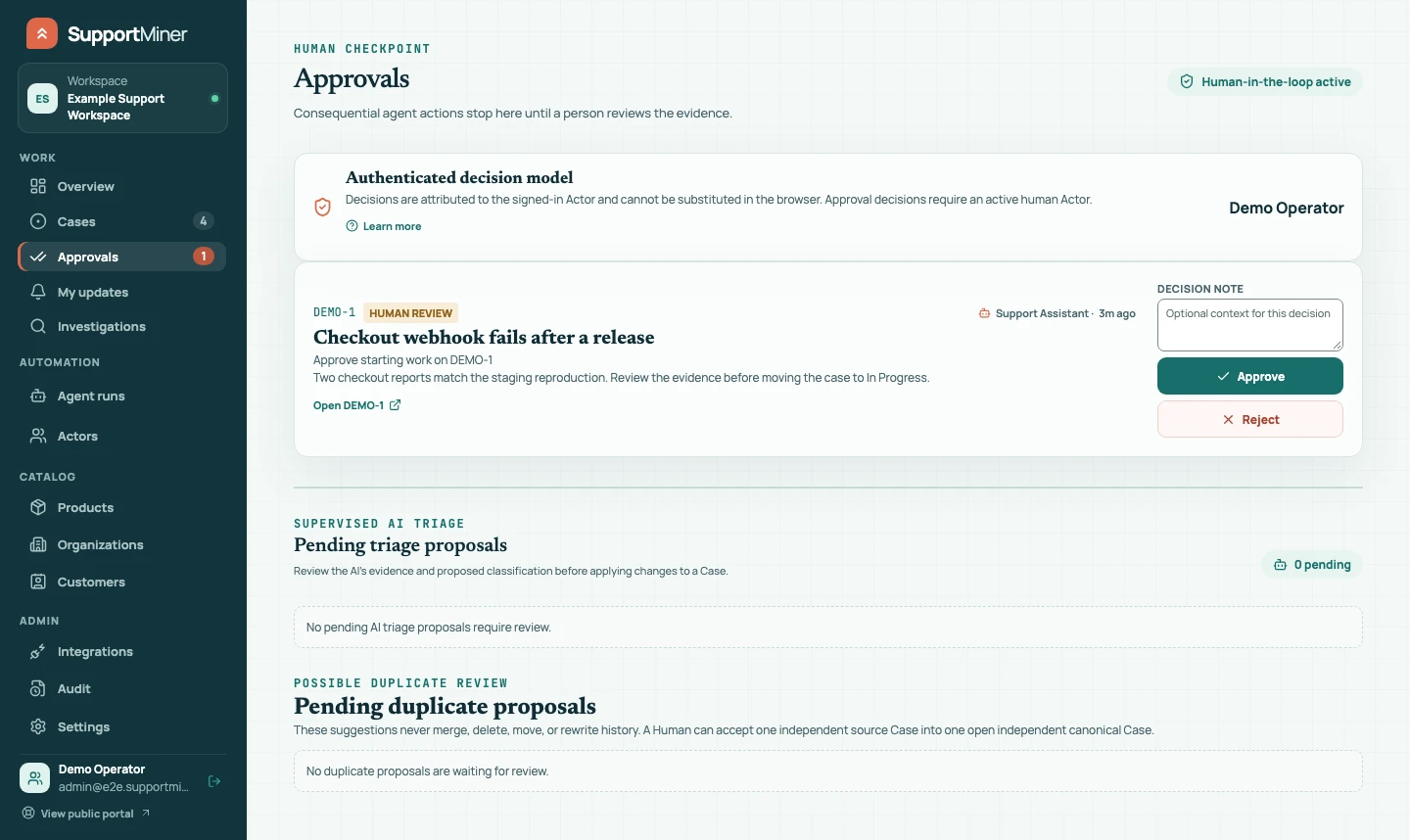
Check the fix before calling it resolved
A resolution summary is where I want to explain what changed and what a customer should do next. I also want a record of the check that showed the fix held. SupportMiner requires a trusted passing verification or a human-recorded exception before a case can move to resolved. If the problem comes back, the earlier check stays in the history and the next resolution has to account for what happened since.
That’s the division of work I’m after. Give the agent useful work to do, give the person reviewing it enough context to decide, and keep the record where the next operator can find it. You can see the published side of cases in SupportMiner’s public portal.